Last updated 2026-08-19
TL;DR
Radon mitigation is the work of lowering indoor radon, usually with a fan-powered soil suction system, after a test hits EPA's 4 pCi/L action level. If you are starting the trade, you learn the test and the standard, you sit the credential your state names, and you confirm every form with that board. There is no single national license.
What is radon mitigation?
Radon mitigation is the building work that lowers indoor radon, usually a fan and pipe system that pulls soil gas from under the house and vents it above the roof. EPA's action level for fixing a home is 4 pCi/L [2]. Homeowners hire that work. New operators sell and install it.
That is the whole job in one breath. The rest is detail.
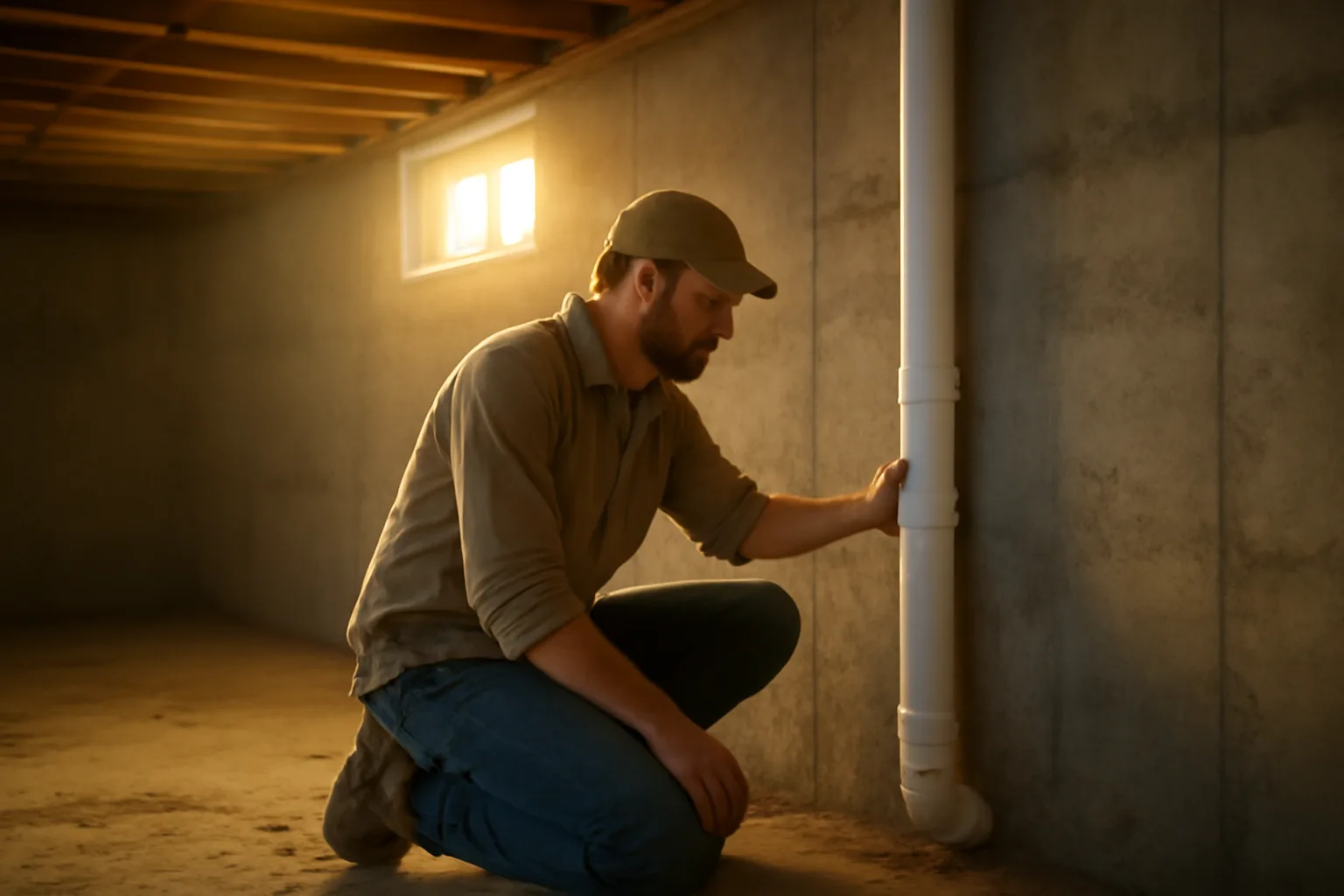
You are moving soil gas. You are not scrubbing a room with a filter and calling the house fixed. Active soil depressurization (ASD) is the method EPA's consumer guide treats as the common repair [3]. A sealed suction point under the slab (or in a crawl), PVC, an in-line fan, and a roof or high-wall discharge. Big openings get closed so the fan can hold a vacuum. Hairline crack foam is not a system.
Radon is a gas from uranium decay in soil and rock. No smell. CDC calls it a naturally occurring radioactive gas that can cause lung cancer [4]. NCI ranks it after smoking as a lung cancer cause [5]. EPA estimates about 21,000 U.S. lung cancer deaths each year from radon [1]. That number is why people pay you.
If you only live in the house, mitigation is what you buy after a valid test. If you want to enter the trade, mitigation is a licensed service in some states and an unlicensed specialty in others. People will tell you there is a national card that covers every job. There is not. National exams exist. State law is local. Start there, not with a decal.
How do you start radon mitigation?
You start radon mitigation by confirming a valid test, reading your state's actual rule, and getting the credential that state (or your first clients) ask for. There is no federal mitigator license. Call the state radon office on EPA's contact list before you buy a fan [9].
Do not start on a neighbor's house with a box-store fan. That is how people eat a fine, a lawsuit, or both.
Read the action level and the repair guide so you know what "fixed" means on paper [2][3]. Then ask the state office one blunt question: do you license mitigation, register it, or stay silent? If they license, request the current application packet from that board and confirm every fee with them. I will not invent a fee or a processing time. Boards change both.
If the state is silent, you still hit local mechanical or electrical permits in a lot of cities. Realtors, labs, and multi-family owners will still ask for NRPP or NRSB. That is custom, not a federal statute. Write down which one they want.
Training is a short mitigation course plus an exam for most national credentials. Field hours beat the slide deck. Ride along if someone will let you. Your first design should be a simple slab-on-grade ASD. Save the 1920s rubble foundation and the wet drain-tile maze for job twelve.
I would spend week one on the state phone tree and the standard, not on a logo. The paper path is the work.
What does a radon mitigation system actually do?
It creates a low-pressure field under the slab or in the crawl so soil gas goes into the pipe instead of the living space. A fan in the attic or on an exterior wall holds that field negative. Discharge sits high, away from windows and fresh-air intakes.
EPA's consumer guide describes this as the usual method and publishes a typical installed cost of about $800 to about $2,500, with an average near $1,200 [3]. Those are EPA's figures for what a homeowner pays. Labor and parts have moved since some printings, so treat them as a published range, not your 2026 bid.
You seal the obvious holes. You do not chase every hairline crack. Sealing alone is not mitigation.
WHO's indoor radon guidance uses a reference level of 100 Bq/m³, about 2.7 pCi/L, which is tighter than EPA's 4 pCi/L line [6]. Clients who read WHO will ask why you smiled at 3.6. My answer is simple. We design to get as low as the house will give, and we retest. We do not worship a single decimal.
A U-tube manometer on the pipe, durable labels, and a post-mitigation test are part of the install. They are not upsells. If you skip the post-test, you did not finish.
| Line | Value | Source |
|---|---|---|
| EPA action level | 4 pCi/L | EPA [2] |
| EPA says consider fixing | 2 to 4 pCi/L | EPA [2] |
| WHO reference level | 100 Bq/m³ (about 2.7 pCi/L) | WHO [6] |
| Typical system cost | about $800 to $2,500 | EPA [3] |
Do you need a license to mitigate radon?
It depends on the state. Some states treat mitigation as licensed radiation work. Many do not. You cannot guess this from a Facebook group.
Florida puts radon in statute 404.056. The disclosure text is blunt: radon "may present health risks to persons who are exposed to it over time" [7]. Illinois runs a dedicated Radon Industry Licensing Act, 420 ILCS 44, which treats mitigation as licensed work [8]. Ohio addresses radon contractors in Revised Code Chapter 3723 [11]. Those are three different legal shapes. Do not copy one state's packet onto another.
California does not run an Illinois-style mitigator license. Colorado's health department publishes radon guidance, but contractor rules still sit with local practice and any general contractor statute that applies. Arizona is another place people assume a radon board exists and then cannot find one. Confirm. Then confirm again with the city that issues permits.
So the call list is state radon office, then the contractor board, then the building department. Three conversations. Write the names down. If someone says "just get NRPP," ask whether that is law or habit. Habit still matters if every listing agent in town asks for the number. Law matters if you want to keep the truck.
Renewal is a separate clock from the first card. If you already work in a licensed state, read the state renewal notes before you let a date lapse, including radon mitigation renewal in florida and Radon mitigation renewal in California: what you actually need.
What paper do you need before you bid the first job?
You need insurance, a written contract, a diagnostic worksheet, proof of whatever credential the state or the client named, and a local permit if the building official wants one for the roof jack or the electrical. That pile is the job. The fan is the easy part.
General liability with completed operations. Workers comp if anyone helps you. I would not bid without that. A cheap policy that excludes pollution or residential work is a waste of money. Read the exclusions.
You also need a clean way to document the pre-test and the post-test. In some licensed states the tester and the mitigator cannot be the same person on the same house. That conflict rule is real. Ask before you quote a "test and fix" package.
If you measure, you follow the device quality program the credentialing body named. Chambers, electrets, and continuous monitors each have their own paper. If you only mitigate, you still need a test from a listed device. A friend with a hardware-store kit is not a baseline you want in a file.
RadonPath sells a $149 one-time NRPP Mitigation Kit if you want the exam map and form list in one stack. You do not need it to start. The free path is the board site and the standard.
Skip the "EPA certified contractor" sticker. EPA does not certify mitigators [13]. That decal is how amateurs look busy.
What training and exams actually matter?
The two national names you will hear are NRPP and NRSB. States that license often accept one or both, or they write their own exam. Course length is a multi-day mitigation class for most people. I will not invent hour counts. Confirm hours with the course provider and with the board that will take the result.
ANSI/AARST SGM-SF (soil gas mitigation for existing homes) is the standard serious inspectors and many written specs point at [10]. Read it. A weekend of videos is not the same document.
What I would actually do: take the class your state names, sit the exam they name, then spend money on a micromanometer and a core drill. Ride along on five installs if you can beg the time.
Waste of money: deluxe coaching that never cites your statute. Also skip UV lamps, "radon sprays," and ionizers sold as mitigation. They do not hold a pressure field under a slab.
If you work a state that stays silent on licensing, the national exam is still the card realtors recognize. Pick one body and finish it. Holding both in year one is rarely worth the extra sitting fee unless a specific client list demands it. Confirm that demand in writing, not in a rumor.
How much does a first-year mitigation shop cost to stand up?
Nobody publishes a clean national total for standing up a one-truck shop, and I will not invent one. The honest pile is a used van, a core drill, PVC and fittings, a few fans from a known radon line, electrical stock, insurance, the course and exam, permit deposits, a phone, and fuel. That is a five-figure mess for most people, with insurance and the vehicle doing the damage. Confirm current course prices with the provider. Confirm license fees with the board.
EPA's $800 to $2,500 range is what homeowners pay for a system, not what you net [3]. Callbacks, extra suction points, and crawl liners eat the middle of that range. Bid the house you saw, not the average.
Do not cheap out on the fan. The second trip costs more than the better unit. Keep two common fans on the shelf so a Friday failure is a parts run, not a week of dead suction.
I would skip a wrap shop, a franchise fee, and a leased "smart" fan program in year one. Paint the van after the first twenty paid jobs. A franchise that sells you leads in a state you are not licensed in is not a business plan.
Local permits vary by town. Some inspectors want a simple mechanical slip. Some want a drawing. Ask before you core the slab, not after.
What standards do boards and inspectors look for?
They look for a system that matches SGM-SF practice, EPA's published repair logic, and any state code on top [10][3]. Pipe routing, fan location, discharge height, a visible manometer, labels, an electrical disconnect, and a plan for condensate. If you cannot point to the clause, you are guessing.
Minnesota's health department publishes plain mitigation notes for residents and points people at listed mitigators [12]. That is the tone a lot of state pages use. Useful. Not a license by itself.
Inspectors argue about roof jacks, exterior fan boxes, and whether the pipe can live in a garage. Get the local read in writing when you can. A text from the building official beats a memory of what another county allowed.
HUD and some lenders add their own radon language on financed housing. If you chase that work, read the program paper they hand you. Do not assume a residential ASD spec covers a multi-family stack.
Label the system so the next person can see what you built. Future you is that person.
What happens after you install the fan?
You commission the system, you read the U-tube, you walk the discharge, and you set a post-mitigation test. The test follows the protocol in play, often after the fan has run long enough for the house to settle. You leave a one-page operations sheet. You show the owner the manometer.
You do not guarantee a number. You guarantee a system built to the standard and a retest path. Odd soil and big leaks miss. Then you add a suction point. That is normal work, not a scandal.
EPA's line is clear: "EPA recommends homes be fixed if the radon level is 4 pCi/L or more" [2]. A post-test of 3.9 is not a trophy if the house can go lower with a cheap extra pit. A post-test of 1.2 on a tight slab is a good day. Write the number down. Keep the device report.
If the manometer later reads zero, the fan is dead or the tube is off. Tell the owner that before you leave. Most callbacks start with "the liquid is even on both sides."
Re-test after big weather, after a renovation, or if the owner adds a wood stove that pulls hard on the house. The system is not a spell.
Which states treat mitigation as a licensed trade?
A cluster of states treat radon work as a licensed or certified trade. Illinois, Ohio, and Florida are three you can read in statute form [8][11][7]. Kansas, Nebraska, New Jersey, Iowa, Indiana, Kentucky, West Virginia, and Rhode Island have also run professional controls of one kind or another. The list moves. EPA's state contact page is the start, not the last word [9].
Some states license measurement and mitigation as separate cards. Some bundle them. Some only nag you to use a listed person. You will not see that nuance on a national sales page.
If you plan to keep the card, renewal rules are where people stumble. Deadlines, CE, and late fees are board-specific. See the state writeups for radon mitigation renewal in alabama, Radon mitigation renewal in Colorado: what you actually need, Radon mitigation renewal in Arizona: what Arizona actually requires, and radon mitigation renewal in georgia. Confirm the current form with the board. Do not trust a blog date, including ours, for a fee.
Zone maps are not licenses. EPA's zone map tells you about expected indoor risk, not whether you may drill a slab [14].
What should you skip in year one?
Skip national franchise fees, "EPA certified" decals, and crawl-space encapsulation sold as a radon-only fix when you have not measured. Skip long fan leases. Skip multi-family and schools until you have a stack of simple houses and a lawyer who has read the spec.
Skip bidding from a photo. Walk the soil pipe, the sump, the crawl hatch, and the attic before you price. A pretty listing photo hides a dirt floor.
Skip gadgets. If a product does not move soil gas or prove a pressure field, it is a side quest.
I would also skip a second state in month two. One board, one set of CE, one insurance endorsement. Add radon mitigation renewal in connecticut or another state after you can renew the first card in your sleep.
Buy tools that touch the house. A wet/dry vac, a good hole saw set, a combustion-safe work light, and a manometer you can actually read. That pile pays. A CRM with "radon workflows" does not, not at five jobs a month.
How do you keep the credential once you have it?
You keep it by watching two clocks: the national credential (if you hold one) and the state card (if your state issues one). CE hours, renewal windows, and device listings if you also measure. They rarely land on the same day.
Put the dates on a paper calendar. Phone reminders fail during a roof week.
State renewal is its own statute, not a courtesy reminder from a national roster. If you work Florida, Illinois, or Ohio, read those rules from the board, not from a forum [7][8][11]. If you work a silent state, your "renewal" may just be the national CE cycle plus a local business license.
Nobody has a clean public dataset on how many first-year mitigators drop the card. The closest honest advice is boring. Do the CE early. Photograph every system. Keep the post-tests. That file is what saves you when a buyer’s inspector calls in year three.
RadonPath is an independent publisher, not a board and not a mitigation company. If you want the kit later, use /start. Confirm every current form and fee with the board that issues the card. No article can promise an approval.
Frequently asked questions
What is radon mitigation?
Radon mitigation is the building work that lowers indoor radon, most often a sealed pipe and fan that pull soil gas from under the house and vent it high. EPA treats 4 pCi/L as the action level to fix a home. Filters and sprays are not mitigation. A post-install test is part of the job.
How do you start radon mitigation?
Start with a valid test, your state radon office, and the credential that office (or your first clients) actually name. There is no federal mitigator license. Take the named course, sit the named exam, get insurance, and ask the city about permits. Confirm every fee with the board. Do not begin on a neighbor’s house.
Is radon mitigation the same as a radon test?
No. A test measures the gas. Mitigation changes the building so the number falls. Some licensed states even split the two jobs so the same person cannot test and fix the same house. You still need a listed device report before and after the install. A hardware-store kit is a weak file for a paid job.
Can I install my own system without a license?
Homeowners can often work on their own house, but cities may still want a permit for electrical or roof penetrations. If you charge anyone else, you follow that state’s contractor and radon rules. Illinois and Ohio treat paid mitigation as regulated work. Confirm with the state office and the building official before you core a slab.
Does EPA certify radon mitigators?
No. EPA sets guidance and an action level. It does not issue a contractor card. NRPP and NRSB are private national credentials. Some states license on top of that. An "EPA certified" decal is a marketing leftover. Ask for the state license number or the national ID, then verify it on the board or roster site.
How much does radon mitigation cost for a typical house?
EPA’s consumer guide publishes about $800 to $2,500, with an average near $1,200, for a typical system. That is a homeowner price range, and older printings may sit under today’s labor. Crawl liners, extra suction points, and long pipe runs land high. Get a site visit. Do not bid from a photo.
What is a good post-mitigation radon number?
EPA recommends fixing at 4 pCi/L or more and says to consider action between 2 and 4. WHO uses a 100 Bq/m³ reference level, about 2.7 pCi/L. I aim as low as the house will give and I retest. A 3.8 that could have been a 1.5 with one more pit is a lazy finish.
What is active soil depressurization?
ASD is a fan that keeps the soil side of the slab (or the crawl) at a lower pressure than the house, so gas flows into a pipe instead of the rooms. It is the method EPA’s consumer guide treats as the common repair. Discharge is high and away from windows. A manometer shows the system is pulling.
Do I need a permit for a radon fan?
Often yes, especially for a new electrical circuit or a roof penetration. Some towns want a mechanical slip and a simple drawing. Some wave you through. Ask the building department in the town of the job, not a forum for a state two time zones away. Install first, argue later is a bad plan.
NRPP or NRSB, which one should I take?
Take the one your state board or your first paying clients name in writing. Many licensed states accept either. Holding both in year one is rarely worth it unless a specific owner list demands it. Confirm the accepted roster on the state application, then finish that exam. Do not collect logos.
Can I mitigate if the test was 3.5 pCi/L?
Yes. EPA says consider fixing between 2 and 4 pCi/L, and WHO’s reference level sits near 2.7. Plenty of owners want the system anyway, especially at sale. Be honest about cost versus risk at that number. Still run a real design and a post-test. A half system for a "small" number is how callbacks start.
Does sealing a crawl space replace a fan?
No. A liner can help a crawl design, and it can cut other moisture problems, but sealing without a planned pressure field is not a radon system. You still need a way to collect and dump soil gas, plus a post-test. Selling encapsulation as radon mitigation without measurements is a year-one mistake.
How do I find my state radon office?
Use EPA’s page for local radon zones and state contacts, then call the number they list and ask whether mitigation is licensed. After that, call the contractor board and the city. Three calls. If you already hold a card, use that state’s renewal instructions and confirm fees with the board, not with a national roster.
Sources
- U.S. EPA, Health Risk of Radon: EPA estimates about 21,000 U.S. lung cancer deaths each year from radon and ranks radon as the second leading cause of lung cancer.
- U.S. EPA, What is EPA's action level for radon?: EPA recommends homes be fixed at 4 pCi/L or more and says to consider fixing between 2 and 4 pCi/L.
- U.S. EPA, Consumer's Guide to Radon Reduction: EPA describes active soil depressurization as the common repair and publishes a typical installed cost of about $800 to $2,500, average near $1,200.
- CDC, About Radon: CDC describes radon as a naturally occurring radioactive gas that can cause lung cancer.
- NCI, Radon and Cancer fact sheet: NCI identifies radon as a lung cancer cause ranked after cigarette smoking.
- WHO, Radon and health fact sheet: WHO recommended a reference level of 100 Bq/m³ for indoor radon, about 2.7 pCi/L.
- Florida Statute 404.056 (2023): Florida statute 404.056 includes radon program and disclosure language that radon may present health risks when it accumulates in buildings.
- ANSI/AARST SGM-SF-2023 soil gas mitigation standard: SGM-SF is the ANSI/AARST standard for soil gas mitigation in existing homes that inspectors and written specs commonly cite.
- Ohio Revised Code Chapter 3723, Radon: Ohio law addresses radon contractors in Revised Code Chapter 3723.
- Minnesota Department of Health, radon mitigation: Minnesota health department publishes resident-facing mitigation guidance and points people to listed mitigators.
- U.S. EPA, find a radon professional: EPA directs the public to state programs and listed professionals and does not itself certify mitigators.
- U.S. EPA, Map of Radon Zones: EPA's zone map describes expected indoor radon potential by county and is not a contractor license.