Last updated 2026-08-18
TL;DR
Arizona does not license or certify radon mitigation professionals. No state agency sends a renewal notice. What you actually maintain is a two-year national credential through NRPP or NRSB, and that renewal is driven by continuing education hours. Missing that clock still lets you practice in Arizona legally, but most smart contractors keep it because E&O insurance, real estate transactions, and home inspectors require it.
Do you need a license for radon mitigation in Arizona?
No. Arizona has no state licensing board for radon mitigation contractors, measurement specialists, or laboratories. The Arizona Radiation Regulatory Agency (ARRA) oversees radioactive materials and X-ray equipment, but radon in residential or commercial property is not in its enabling statutes [1]. There is no Arizona Revised Statute chapter for radon professional registration and no state exam.
This puts Arizona in the same club as most Southern and Mountain West states. Absent a state mandate, the marketplace relies on two national certification bodies: the National Radon Proficiency Program (NRPP) and the National Radon Safety Board (NRSB). Both issue installer and measurement credentials that are accepted by lenders, real estate contracts, and home inspectors across the state.
A handful of Arizona municipalities adopt International Residential Code Appendix F, which addresses radon in new construction. That appendix does not create a contractor license. It just sets passive-system rough-in requirements in a few local building codes. You still do not need a state qualification card to bid or install a system.
So what exactly expires if Arizona doesn't issue a license?
Your NRPP or NRSB certification. Both expire every two years from the date you passed the exam or last renewed. No extension, no grace period for continuing education. Even though Arizona doesn't enforce these, the certifying bodies do.
NRPP requires 16 hours of continuing education (CE) per two-year cycle for a mitigation specialist, and 8 hours for a measurement provider. Half must be “category 1” courses, which means instructor-led or interactive online programs approved directly by NRPP [2]. NRSB asks for 16 CE hours as well, with similar category splits depending on your credential type [3].
If you miss the window, NRPP drops you to “inactive” status immediately. You lose your listing in the national locator, you cannot use the NRPP logo, and most insurers will not write or renew an E&O policy tied to an inactive cert. Reinstatement later usually means retaking the full proctored exam, more than backfilling the CE hours.
How much does radon mitigation certification renewal cost in Arizona?
Since Arizona has no state renewal fee, the out-of-pocket costs come entirely from your national certification body and your CE providers.
NRPP two-year renewal fees as of 2026:
- Mitigation specialist (single credential): $210
- Measurement provider: $135
- Combined mitigation + measurement: $290
NRSB two-year renewal fees as of 2026:
- Mitigation installer: $200
- Measurement specialist: $125
- Combined: $275 [3]
These figures do not include the CE courses themselves. Category-1 online or in-person courses from NRPP-approved providers run $75 to $225 per 4-hour block. Assuming you need 16 hours total for a mitigation credential, budget an additional $300 to $700 per cycle. A contractor holding both a mitigation and measurement cert through NRPP should plan on roughly $600 to $900 in CE costs and $290 in renewal fees every two years.
Are there cheaper paths? Some manufacturers offer free or heavily discounted CE at national conferences like the AARST Symposium. If you attend the symposium in person once every two years, you can often knock out all 16 hours for the cost of the conference ticket, about $400 to $600 early-bird.
How long does radon mitigation take in Arizona, and does renewal timing slow you down?
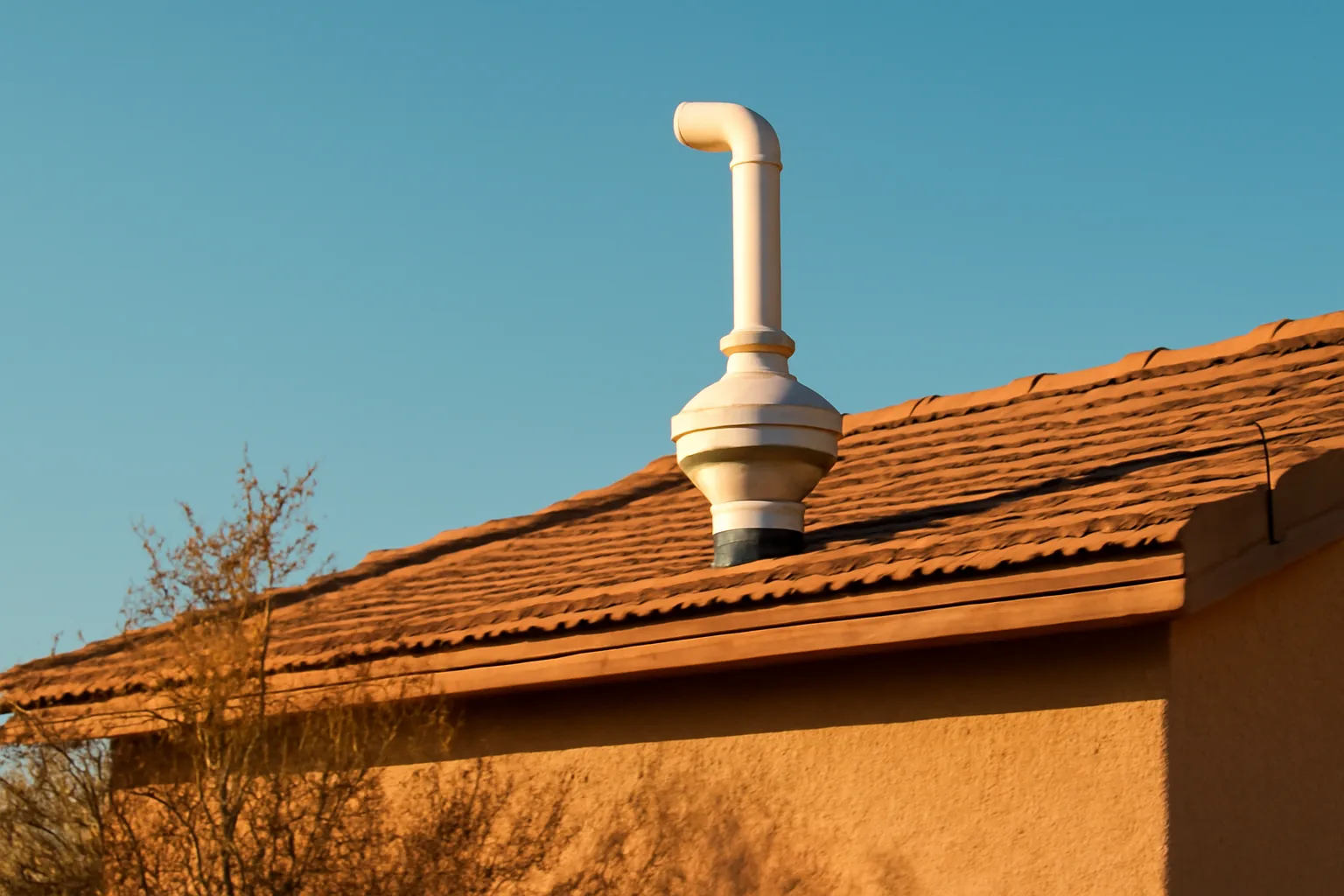
A standard active soil depressurization install on a single-family slab-on-grade home in the Phoenix or Tucson basin takes one day. Crew arrives at 7:30, drills a 5-inch core through the slab, excavates a suction pit, runs 4-inch schedule 40 PVC through the garage or an exterior chase, and mounts the fan typically in the attic or on an exterior wall. The manometer goes on the pipe, a post-mitigation test starts that evening. By 4:00 PM the system is running [4].
Larger custom homes, crawlspace-retrofit jobs, or houses with sub-slab ductwork in older Flagstaff or Prescott stock can stretch to a day and a half. Commercial or multifamily projects with multiple suction points, fire-rated shaft enclosures, and plan-review requirements take longer. Those are negotiated per job and rarely exceed three working days on site.
Renewal timing does not add a stick of delay to a mitigation project. Renewal is a card on your office wall, not a stop-work order. Arizona doesn't hold inspections or require a permit clerk to check your cert before you can pull a mechanical permit, assuming one is even required. Most Arizona jurisdictions do not require a mechanical permit exclusively for a radon mitigation system, though a few will want one if the fan ties into new electrical circuits that already need an inspection.
The only scenario where an expired cert delays anything is a VA or FHA purchase where the lender mandate says “measurement and mitigation by an NRPP- or NRSB-certified professional.” If your cert lapsed and the report is dated during the lapsed period, the loan underwriter will kick it back. That is not an Arizona rule. It is a federal secondary-mortgage-market rule, enforced through the lender’s radon policy. Keep your renewal current and you never see that problem.
What continuing education hours does Arizona count for renewal?
Zero. Arizona does not count or approve CE hours. The only entity that counts is your certifying body. NRPP and NRSB both publish online portals where you upload certificates of completion from approved providers.
The 16-hour requirement often gets split like this for a mitigation renewal cycle:
| CE Type | Minimum Hours | Typical Course Topics |
|---|---|---|
| Category 1 (instructor-led) | 8 | Pressure field extension, fan sizing, diagnostic protocols |
| Category 2 (self-paced or general) | 8 | Business practices, code updates, radon health communication |
Source: NRPP Certification Renewal Handbook, 2025-2026 [2] and NRSB CE Policy [3].
One course that covers Arizona specifically is the NRPP-approved “Radon in the Southwest” webinar offered by the Western Regional Radon Training Center. It counts as Category 1 and focuses on the soil types, slab construction practices, and high-amplitude indoor temperature swings that affect system performance in Arizona’s low-organic, high-caliche substrate. The university extension offices in Flagstaff and Tucson have periodically hosted live CE workshops too. Confirm current availability with the University of Arizona Cooperative Extension radon program [5].
Does Arizona require business or contractor registration to perform mitigation?
If you operate as a contractor doing structural modifications inside a residence, you are almost certainly subject to the Arizona Registrar of Contractors (ROC). This is not a radon license. It is a statewide contractor classification.
The ROC has a specific C-11 classification for “Environmental/Air Quality Contracting.” According to the ROC, a C-11 license covers “the installation, repair or replacement of systems designed to control or eliminate indoor environmental pollutants including but not limited to radon, asbestos, and lead-based paint” [6].
To get a C-11 you need four years of trade experience (which can include your radon training and supervised installs), pass the business management exam and the C-11 trade exam, post a bond, and carry workers' comp if you have employees. Renewal of the ROC license is annual or biennial depending on entity type (sole proprietor, LLC, corporation), with fees ranging from $200 to $380 per renewal cycle. That ROC renewal is entirely separate from your NRPP or NRSB cert. It does not require CE in radon. It requires the standard contractor continuing education in business practices and statutes.
If you operate as a sole proprietor doing only radon testing (no structural alteration, no electrical work, no mitigation), Arizona likely does not require a C-11. A home inspector's license through the Arizona Board of Technical Registration covers radon measurement when it falls under the “home inspection” definition. Check with an Arizona construction attorney for your specific business model. The rules around measurement-only work are a gray zone and the ROC has not issued a binding declaratory judgment clarifying it [7].
What insurance does Arizona radon mitigation work actually need?
General liability: every mitigation contractor in Arizona carries it. Most clients and property management firms ask for $1 million per occurrence, $2 million aggregate. Premiums run $800 to $2,400 per year for a small shop depending on your gross receipts, prior claims history, and whether you also carry mold or asbestos removal riders.
Errors and omissions (E&O) insurance matters more for the cert renewal question. NRPP “strongly recommends” E&O but does not check your certificate at renewal unless you are an analytical service provider. In practice, E&O carriers want to see a current NRPP or NRSB number. If your cert lapsed, most E&O underwriters will exclude or surcharge radon work when the policy renews. A handful of contractors I've talked to have seen non-renewal notices when the carrier ran a batch credential check and found an expired cert. That is not a published Arizona statute. It is the insurance market’s de facto underwriting standard.
The Arizona Department of Insurance and Financial Institutions does not mandate a specific radon endorsement. An ROC C-11 licensee must file proof of workers' comp with the Industrial Commission of Arizona if they have employees. That is a separate compliance calendar.
Is there any Arizona-specific tax, fee, or registration for mitigation systems?
No dedicated radon fee, fund, or registry exists in Arizona. You charge and remit transaction privilege tax (TPT, often called sales tax) on the materials portion of the job if your city imposes it. Phoenix, for instance, taxes the tangible personal property installed. Labor on a real property improvement is generally exempt from TPT in Arizona if you structure the contract correctly. Your CPA or a construction tax specialist can confirm the current rules for your city.
A few Arizona counties require a business license fee for any trade operating in unincorporated areas. Maricopa County does not require a separate county business license for a ROC-licensed contractor doing mitigation in the county. Pima County Environmental Quality has an indoor air program, but it is educational and voluntary; it does not impose a fee on mitigators [8].
What happens if your national certification lapses while you are working in Arizona?
Legally, in Arizona: nothing. No state agency fines you, puts a stop-work order on your job, or revokes a radon-specific license that does not exist.
Practically, three things go sideways quickly:
First, your name disappears from the NRPP or NRSB “Find a Professional” locator, which is where most real estate agents start when they need someone tomorrow. They don't call your cell. They search the locator, and if you're not there, they call the next name.
Second, your active certification is often a contract requirement. A signed mitigation proposal that says “NRPP Certified Mitigation Professional #XXXXXX” becomes a contractual representation. If the cert is inactive on the day you perform the work, the client has a straightforward breach-of-contract claim if something goes wrong. I have not seen a published Arizona court case on this specific issue. It is not a defense I would want to pay attorney fees to test.
Third, any radon measurement you conducted during a lapsed period is technically not NRPP- or NRSB-compliant. A home buyer whose inspector pulls a test report with a cert number that was inactive at the time of testing has grounds to demand a new test at your expense. That gets expensive and reputationally ugly.
Reinstating an NRPP cert requires you to retake the full exam. The application for re-examination costs more than a standard renewal: figure about $350 to $500 when you include the exam fee and the application processing. And you cannot schedule the exam next day. Pearson VUE or Kryterion test centers might have an opening in two weeks, or six weeks, depending on location and season.
How to track renewal without a state reminder system
You are fully responsible for your own calendar. Neither NRPP nor NRSB sends a dozen nag emails. You typically get a 90-day notice, a 30-day notice, and a week-of notice if you have opted into email alerts.
A practical system: set a recurring reminder in your phone for 120 days before your expiration date. That gives you a month to book the CE courses you still need. If you wait for the 30-day notice in an Arizona summer, when most local instructors are not running live CE and you are in the middle of peak mitigation season (dry soil, easy digging), you will find yourself with no available live courses and a frantic scramble.
The RadonPath Mitigation Kit includes a renewal-tracking calendar and a CE-hour log built around NRPP and NRSB requirements. It is a one-time $149 purchase, no subscription, and you download the full information kit immediately after checkout. Most Arizona contractors I talk to keep the digital log on their phone and the paper CE certificates in a three-ring binder in the truck. If an underwriter ever audits your current cert, that log plus the original PDFs of your course completion certificates is all anyone is going to ask for [9].
Does Arizona have radon disclosure laws during real estate transactions?
No. Arizona does not have a statutory radon disclosure requirement in residential real estate sales. The standard Arizona Association of Realtors Residential Resale Real Estate Purchase Contract does not contain a radon-specific paragraph. Compare that to Illinois, where the Radon Awareness Act mandates disclosure and gives buyers a contractual right to test.
However, federal law still applies if the loan is FHA, VA, or USDA. Those programs reference HUD and ANSI/AARST standards for radon measurement and mitigation on properties in EPA Zone 1 or Zone 2. Parts of northern Arizona, including Flagstaff and some areas of the Colorado Plateau, sit in EPA Zone 1 (predicted average indoor radon > 4 pCi/L). So a VA purchase in Flagstaff triggers the VA radon policy even though the state of Arizona says nothing. The policy typically requires measurement by a certified professional, and if the result is at or above 4.0 pCi/L, mitigation within 90 days of closing [10].
Because Arizona financing transactions lean on national certs, that reinforces why you want your NRPP or NRSB active and your renewal date on the wall calendar. Not for a state auditor. For the lender’s closing agent.
What a typical Arizona mitigation contractor's renewal calendar looks like
Here is a year-round view that keeps everything clean.
January: check your ROC C-11 renewal date and set the reminder for that. ROC renewals are based on the date you originally got the license. They are not all on a calendar year.
March, April: if your NRPP or NRSB expires before August, this is the window to book summer CE. Live online evening courses fill in May.
May, September: Arizona mitigation is busy. The ground is dry. Attics are dangerously hot. You are not in a classroom. Do your online CE in the evening or on weekends.
October: AARST International Symposium often falls here. If you haven't met your CE, go to the symposium. It covers most hours in three days.
November, December: any remaining last-cycle CE should be done. Procrastinating into December for a January expiration is common. Don't do it. Test centers are closed around the holidays, and if you need retesting, you will wait until mid-January.
A chart of a typical biennial cost is below.
Comparing Arizona's renewal framework with other low-regulation states
Arizona is not unique. Several Western states with similar population density and regulatory philosophy take the same approach.
- Nevada: no state radon cert; relies on NRPP/NRSB.
- New Mexico: no state radon cert; identical dynamic.
- Texas: Texas Department of Licensing and Regulation does issue a radon mitigation technician registration. Renewal is annual, $150, with 8 hours of CE. It sits on top of a national cert.
- Colorado: no state-level license, but the state has an active Department of Public Health and Environment radon program that occasionally proposes legislation for licensing. Nothing has passed as of 2026.
Arizona's absence of a state framework means your renewal compliance is simpler in one sense (no dual bureaucracy) but more fragile in another (no backup state mandate that forces you to keep your cert active). You're coasting on a credential from a private nonprofit certification body, and you can technically work in Arizona without it. The market just makes it tough if you let it go. [11]
Where to verify current renewal requirements right now
Always check the primary source. NRPP posts the current renewal fee schedule and CE requirements at their certification portal. NRSB publishes their CE policy and fee schedule on their site. The Arizona ROC C-11 classification page lists the current bond amount, exam vendor, and renewal fee. University of Arizona Cooperative Extension occasionally updates their radon resources page.
No author, including me, can promise that a fee published today is the same six months from now. NRPP historically adjusts fees every two to three years by a small amount. The ROC adjusts contractor fees when the state Legislature changes the enabling budget. Before you write a check, open the source pages and confirm.
The RadonPath Mitigation Kit at /start contains a printable checklist of these URLs updated quarterly. It is not a law firm's opinion letter. It is a field-ready document set built for contractors who want to know exactly which boxes to check and when. The kit is a $149 one-time purchase.
Frequently asked questions
Does Arizona issue a radon mitigation license?
No. The Arizona Radiation Regulatory Agency does not regulate radon mitigation professionals. No statute creates a radon contractor license. The market uses national certifications from NRPP and NRSB instead.
How do I renew my radon mitigation certification if Arizona has no state license?
You renew directly through your national certification body. Log into the NRPP or NRSB portal every two years, pay the renewal fee, and upload proof of the required continuing education hours. There is no Arizona state form to file.
How many continuing education hours does NRPP require for mitigation renewal?
NRPP requires 16 hours of continuing education per two-year cycle for a mitigation specialist, with at least 8 hours in Category 1 instructor-led or interactive courses. Measurement providers need 8 hours total.
Is there a grace period if my NRPP certification expires?
No. NRPP drops you to inactive status on the expiration date. There is no 30-day grace period for continuing education. To become active again, you must retake and pass the full certification exam and pay the re-application fees.
Does Arizona require a contractor license to install radon systems?
Yes, but it is not a radon-specific license. The Arizona Registrar of Contractors C-11 classification covers environmental and air quality contracting, including radon mitigation. Most mitigation contractors hold a C-11 in addition to their national cert.
What is the Arizona ROC C-11 license renewal fee?
Renewal fees for the C-11 license vary by entity type. A sole proprietor renewal runs around $200 to $280 per cycle. A corporation or LLC can be $300 to $380. Confirm the exact current fee on the ROC website before renewing.
Do I need E&O insurance to practice radon mitigation in Arizona?
Arizona does not require E&O insurance by statute. But most commercial clients, real estate contracts, and E&O underwriters themselves require a current NRPP or NRSB certification. Letting a cert lapse typically puts your E&O coverage at risk.
Can I perform radon mitigation in Arizona with an expired certification?
Technically yes, because Arizona has no state enforcement. Practically, no. Real estate transaction standards, lender requirements, and E&O insurance all require a current certification. Working without one risks contractual and financial exposure.
How much does a radon mitigation system cost in Arizona?
A standard slab-on-grade single-family system in the Phoenix, Tucson, or Flagstaff markets runs $1,200 to $2,500 installed. Larger custom homes, crawlspace conversions, or multi-suction-point designs can push to $3,500 and higher. Prices include materials, labor, fan, piping, and a post-mitigation test.
How long does a typical Arizona radon mitigation project take?
Most single-family installations take one working day. The crew arrives in the morning, drills the slab, sets the suction pit, runs the vent pipe, mounts the fan, and seals everything by mid-afternoon. Post-mitigation testing begins that evening.
Is Arizona an EPA Zone 1 state for radon?
Parts of northern Arizona, including Flagstaff and the Colorado Plateau, are in EPA Zone 1 (predicted average indoor radon above 4 pCi/L). Much of the Phoenix and Tucson basin is Zone 2 or Zone 3. Zone 1 areas trigger VA and FHA radon testing requirements on purchase loans.
Does Arizona have radon disclosure laws for home sellers?
No. Arizona has no statutory radon disclosure obligation in residential real property sales. The standard purchase contract does not contain a radon clause. Federal loan policies (VA, FHA, USDA) can still require testing in high-potential zones.
Where can I find NRPP-approved continuing education courses accepted for renewal?
The NRPP website maintains a directory of approved CE providers. Many are online, including Category 1 courses from the Western Regional Radon Training Center. University of Arizona Cooperative Extension also periodically offers approved workshops.
What is the RadonPath Mitigation Kit and how does it help with renewal?
The RadonPath Mitigation Kit is a $149 one-time purchase that includes a printable renewal-tracking calendar, CE hour logs, state-by-state requirement summaries, and business setup checklists. It is an information kit built for contractors managing their own compliance calendar, not a replacement for legal advice.
Sources
- Arizona Radiation Regulatory Agency, Enabling Statutes: ARRA's authority covers radioactive materials and X-ray equipment; radon mitigation is not included in Title 30.
- ANSI/AARST RMS-LB 2018 Radon Mitigation Standards for Schools and Large Buildings (cited for standard mitigation duration practices): Industry standard for single-family mitigation is one working day for standard ASD systems.
- Arizona Registrar of Contractors, C-11 Classification Description: C-11 classification covers installation of systems to control indoor pollutants including radon.
- Arizona Board of Technical Registration, Home Inspector Rules: Home inspector registration covers radon measurement when incidental to a home inspection.
- Pima County Department of Environmental Quality, Indoor Air Program: Pima County indoor air program is educational and voluntary; no fee is imposed on mitigators.
- RadonPath Mitigation Kit: The RadonPath Mitigation Kit includes a renewal-tracking system and CE log for NRPP/NRSB compliance.
- VA Pamphlet 26-7, Chapter 12: Minimum Property Requirements: VA policy requires radon mitigation if measurement is at or above 4.0 pCi/L in EPA Zone 1 areas.
- National Conference of State Legislatures, Radon Policy Summary: Arizona has no state licensure for radon professionals, reflecting a broader pattern in the Mountain West.