Last updated 2026-08-19
TL;DR
Radon mitigation is the work of lowering indoor radon, usually with an active soil depressurization fan and pipe. EPA recommends fixing a home at 4 pCi/L or higher. There is no federal mitigator license. Start by reading the EPA guides, checking your state board, taking an accepted course and exam, then installing to current AARST/ANSI practice and post-testing. Confirm fees and rules with the board that writes them.
What is radon mitigation?
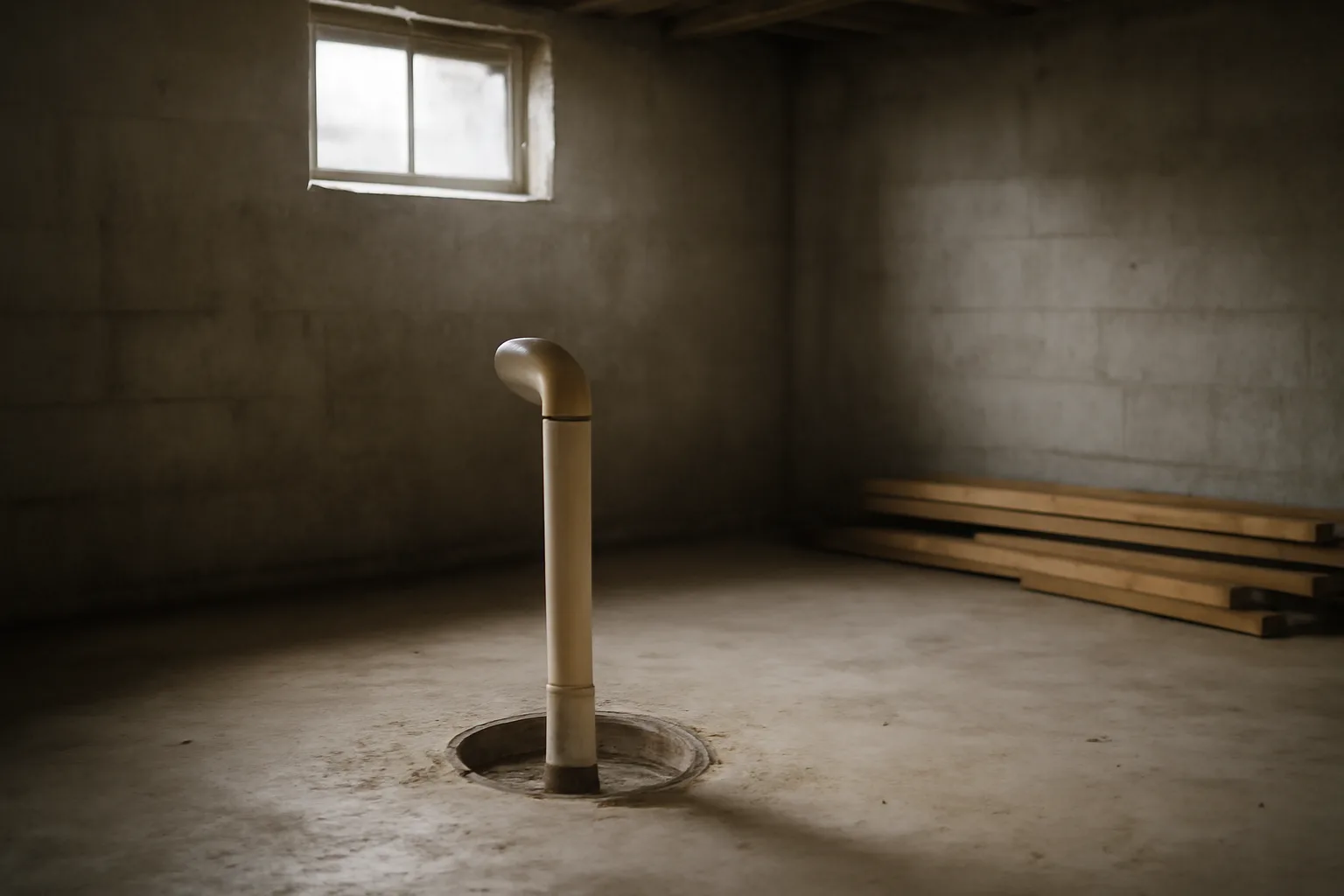
Radon mitigation is the work of lowering the radon concentration inside a building, most often by changing the pressure under the slab or in the crawl so soil gas stops coming in. The usual install is an active soil depressurization system. A fan pulls from a suction pit, pipe carries the gas, and the exhaust dumps outdoors above the roof.
Radon is a radioactive gas from uranium in soil and rock. EPA's Citizen's Guide calls it a "cancer-causing, radioactive gas." EPA estimates that radon causes about 21,000 lung cancer deaths each year in the United States. [1][4]
You're not scrubbing room air with a pretty filter. Charcoal buckets and ion boxes are not this trade. The physics is soil gas entry through the foundation. Close the big holes, then build a negative pressure field under the building that wins against the house.
WHO's fact sheet states that "Radon is the most important cause of lung cancer after smoking." That is the health case. It is not a sales story. [3][7]
Most first-year work is existing single-family houses. Slabs, crawls, and mixed foundations. Schools and big multifamily buildings run their own standards. Don't start there.
If a client asks what they're buying, say a labeled system they can check, a fan that runs all the time, and a post-mitigation test that shows the number moved. That's the job.
How do you start radon mitigation?
You start by learning the gas, then the license map, then one house. Not a national myth about a single federal ticket. There isn't one.
Read EPA's Citizen's Guide and the Consumers Guide to Radon Reduction. They're free PDFs. Then call your state radon office and ask if mitigation is licensed, certified, registered, or left to ordinary contractor rules. Write the answer down. Florida law directs the department to certify people who mitigate buildings for radon. Illinois licenses the radon industry under 32 Ill. Adm. Code 422. Plenty of states have no radon-specific credential at all. Confirm the current rule. Don't guess from a forum. [2][5][11]
Take a mitigation course your state or cert body accepts. Sit the NRPP exam, the NRSB exam, or the state exam if that's the path. Get general liability and ask your insurer about radon wording. Some policies get cute.
Buy diagnostics gear before you buy a pallet of fans. A micromanometer, smoke, a vac, pipe, and a fan you can support. Learn pressure field extension on a house that is not your cousin's panic job.
First paid folder: pre-test, diagnostics notes, layout, permits, photos, fan model, post-test, client instructions. That's how you start. Not a van wrap.
If you want a feel for how different offices talk, read the Florida radon mitigation board notes and the Alabama radon mitigation board notes, then call the office that actually writes the rule.
What radon level means you should mitigate?
Fix at 4 pCi/L or higher. That is EPA's number. The 2016 Citizen's Guide says: "EPA recommends fixing your home if the results of one long-term test or the average of two short-term tests show radon levels of 4 pCi/L or higher." [1]
WHO's reference level is 100 Bq/m3. That converts to about 2.7 pCi/L, since 1 pCi/L equals 37 Bq/m3. Some clients want that lower target. Fine. Price the work. [3]
EPA also says to consider fixing between 2 and 4 pCi/L. Outdoor air sits near 0.4 pCi/L. The U.S. indoor average is about 1.3 pCi/L. Nearly 1 out of every 15 homes in the U.S. is estimated to have elevated radon. [1]
| Indoor radon | What EPA says | Practical note |
|---|---|---|
| About 0.4 pCi/L | Outdoor average | You will not beat outdoor air |
| About 1.3 pCi/L | U.S. indoor average | Common result on a quiet test |
| 2 to 4 pCi/L | Consider fixing | Many clients still want a system |
| 4 pCi/L or higher | Fix the home | Action level in the Citizen's Guide |
Risk numbers sit in that same EPA table. At 4 pCi/L, about 7 of 1,000 never-smokers would get lung cancer over a lifetime of exposure. For smokers the table lists about 62 of 1,000. [1]
I would not talk a client out of mitigation at 3.5 if kids sleep in a basement. I also would not promise zero. Outdoor air still has radon.
Zone maps are planning tools. EPA's Map of Radon Zones is not a house test. Zone 1 counties have a predicted indoor average potential above 4 pCi/L. Test the building in front of you. [8]
How does a radon mitigation system actually work?
Active soil depressurization is the method that shows up on most invoices. You open a suction point through the slab or in a sealed crawl, drop a pit, run PVC, hang a fan, exhaust above the roof, seal the obvious openings, and prove a pressure field.
The fan runs all day. Typical residential fans draw tens of watts, not a dryer circuit. Continuous operation is the point. A system that only runs when someone remembers is not a system.
You want the sub-slab or sub-membrane pressure lower than the house so soil gas moves to the pipe, not through cracks into the living space. That's diagnostics. One pit on a tight slab can treat a whole house. A rubble foundation might need more suction points. Nobody knows until you measure communication.
Sealing helps the fan. Sealing alone is not mitigation. EPA's Consumers Guide walks through active soil depressurization as the common approach and lists other methods when that approach is a poor fit. [2]
Discharge location matters. You don't dump beside a window. Follow the current standard for clearances. Label the pipe. Leave a manometer. If the homeowner can't tell the fan is working, you did half a job.
New houses can be built with passive pipe and sealed slabs under EPA's radon-resistant new construction notes. That is a builder path, not your first existing-home invoice. [14]
Do you need a license to mitigate radon?
Sometimes. It depends on the state, and sometimes on the city. There is no federal radon mitigation license.
Florida certifies people who mitigate buildings for radon. Illinois licenses the radon industry. Pennsylvania certifies radon mitigators under 25 Pa. Code Chapter 240. Other states require a national credential and a state listing. Some states require nothing radon-specific. You may still need a contractor license, an electrical permit, or a mechanical permit. [5][11][15]
I would not start advertising in a licensed state on a national card alone until the state office says that card is enough. Some boards want their own application, a fee, and a surety. Those dollars change. Confirm with the board. I won't invent a current fee here, and neither should any blog.
National certs still matter in unlicensed states. Buyers and attorneys look for them. NRPP publishes a new-applicant path. Read that page before you pay a school. [9][12]
Local rules bite. A county that wants a building permit for a roof jack does not care that the pipe is "just PVC." Pull the permit.
For a feel of how different offices talk, skim radon mitigation board in California, Colorado, and Arizona. Then call.
What training and exams do new mitigators take?
Plan on a dedicated mitigation course. Not a weekend of videos. Many paths run about two days of mitigation training plus an exam. Measurement is a separate credential in a lot of programs. If you will test your own work, ask whether your state lets a mitigator post-test an install they just finished. Some say no.
NRPP's new-applicant page is the checklist I would print first if you're going the national route. Approved course providers change. The cert body or the state lists who counts this year. [9]
Exam content tracks entry routes, diagnostics, materials, electrical safety, and the standard of practice. Fail that, and you don't get a number. Pass it, and you still need insurance and a business identity.
A paper kit can help you not lose the forms. RadonPath sells a $149 one-time NRPP Mitigation Kit if you want that stack in one place. You can also build the stack from free EPA PDFs and your board's application. I'd read both before I spent anything.
CE hours come later. First year, your real training is diagnostics on ugly foundations. Sit in a crawl. Watch a slab that will not communicate. That's the class the exam cannot give you.
How much does a typical mitigation job cost?
EPA's 2013 Consumers Guide to Radon Reduction put a typical house system between $800 and $1,200. That figure is old. Labor, fans, and roof work moved. Use it as a historical floor, not a current bid. [2]
I'd expect many ordinary slab houses to land higher than that 2013 band once you add permits, electrical, and a real callback policy. Hard crawls, drain-tile tie-ins, and block-wall suction cost more. Nobody has a clean national average I trust for this year. The closest official range still cited everywhere is that EPA booklet.
Your job cost is materials, labor, drive time, the fan, electrical, and the post-test. Cheap fans that die in 18 months will eat your margin. I buy the fan I'd want on my own house.
Don't race to the bottom. A bargain internet special is how diagnostics get skipped. That's a waste of the client's money and a liability for you.
Give a written scope. Suction points, fan model, discharge, sealing, permit, post-test. Change orders when the slab is a surprise. Colorado State's radon-in-the-home fact sheet is a decent homeowner-level companion if a client wants a university page, not a sales deck. [13]
What standards and paper do you follow on a job?
On existing homes, the document people mean is the AARST/ANSI soil gas mitigation standard, SGM-SF. Buy the current edition. Read it. The 2023 edition is posted through AARST's standards site. [10]
The standard covers diagnostics, materials, labeling, discharge, electrical, and documentation. It is not a vibe. Health departments and lawyers can read.
Keep a job file. Pre-mitigation test with device and conditions. Sketch of suction points. Pressure field results. Photos of the pit and the roof jack. Fan serial. Electrical disconnect. Client operating notice. Post-test. Some states prescribe the form. Some don't. Keep it anyway.
Device records matter if you also measure. Calibration dates. If you subcontract the post-test, keep that report with your file.
EPA's consumer booklet is what homeowners read. Your work should not contradict it. If a city inspector wants a different label or a different disconnect, do both. The standard and the permit can sit in the same folder. [2]
I would rather over-document a quiet $1,200 slab than argue later from memory. Memory loses.
How do you test before and after mitigation?
You do not mitigate a rumor. You mitigate a number. Short-term tests run about 2 to 90 days. Long-term tests run 91 days or more. EPA prefers a long-term test for a better year-round picture, and accepts one long-term result or the average of two short-term tests for the fix decision. [1]
Closed-house conditions matter for short-term work. Follow the protocol your state or the measurement standard requires. If you are not certified to measure, hire someone who is. ATSDR's radon primer is a clean read if you need the decay-chain basics before you argue with a bad test. [6]
Post-mitigation testing is how you know the system did something. Test after the system has run long enough for conditions to settle, per the standard you work under. I want that result in the file before I call the job closed.
EPA's usual homeowner advice is to retest at least every two years, and after a renovation or a fan change. [1]
Continuous monitors are fine if they're approved and you know the interference rules. Cheap unlisted packs are not how you defend a number in a real estate fight.
How long does a residential mitigation take?
A straightforward slab house can be a day on site if diagnostics are clean and the electrical is easy. Add time for a permit, a frozen roof, a crawl with no vapor barrier, or a house that will not communicate.
I plan diagnostics first, even if I install the same day. Drilling blind is how you miss a second foundation pour.
The fan ships. The pipe is local. The delay is usually the permit desk or the homeowner who will not hold closed-house conditions for the post-test.
Nobody should quote a fixed approval date for a state license or a city permit. Boards move on their own clock. Ask them. If a school or a listing agent wants a date carved in stone, give a range and put the permit assumption in writing.
Return trips happen. A fan that was quiet on day one can whistle after a cold snap. Budget that in your head, even if you don't print it on the flyer.
Can a homeowner install their own radon system?
In many places, yes. That does not make it a good system. EPA's consumer materials explain how systems work and still point people toward qualified contractors. [2][12]
I'd DIY a manometer check on my own house. I would not DIY a roof discharge next to a dormer without reading the clearance rules. Electrical is where people get hurt.
If you're the new contractor, don't sneer at DIY calls. Some of those systems only need a better suction point and a real fan. Price the fix. Photograph the existing mess before you touch it.
For your own first house, hire another certified mitigator if your state allows that. Watching someone else's diagnostics is worth more than a new core drill.
Homeowners who refuse a post-test are flying blind. Say that out loud. A pretty pipe with no number is decoration.
What should you confirm with your state board first?
Before you print cards, confirm five things with the radon office or the contractor board. Is a radon-specific credential required. Which national exams they accept. Whether you may post-test your own work. What insurance they want. Whether they want a surety or a registration fee.
Then call the building department in the cities you'll work. Roof jacks and electrical disconnects are local.
Read Connecticut radon mitigation board notes and Georgia notes if those are your markets. Same habit, different phone number.
RadonPath is an independent publisher, not a law firm and not a mitigation company. If you want the paper in one kit, use /start. The EPA PDFs and the statute still win if they disagree with anyone's blog, including this one.
Keep copies of your credential, CE, and insurance in the truck. Inspectors ask. First-year operators who cannot produce the paper look like hobbyists, even when the fan is perfect.
Frequently asked questions
What is radon mitigation?
Radon mitigation is the work of lowering indoor radon, usually by installing an active soil depressurization system. A fan pulls soil gas from under the slab or a sealed crawl and vents it above the roof. The goal is a documented post-test below EPA's 4 pCi/L action level, with a system the owner can check.
How do you start radon mitigation?
Read EPA's free Citizen's Guide and Consumers Guide, then call your state radon office and ask if the work is licensed. Take an accepted mitigation course, sit the NRPP, NRSB, or state exam, get insurance, and learn diagnostics on real foundations. There is no federal license. Confirm current rules with the board.
What is the EPA radon action level?
EPA recommends fixing a home at 4 pCi/L or higher, based on one long-term test or the average of two short-term tests. EPA also says to consider action between 2 and 4 pCi/L. WHO's reference level is 100 Bq/m3, about 2.7 pCi/L. Outdoor air is near 0.4 pCi/L.
How much does radon mitigation cost?
EPA's 2013 Consumers Guide put a typical house system between $800 and $1,200. That range is old. Labor, fans, permits, and hard foundations push many current jobs higher. Nobody has a clean national average for this year. Bid the house in front of you, not a decade-old booklet.
Do I need a license to do radon mitigation?
It depends on the state. Florida, Illinois, and Pennsylvania are examples of states with radon-specific credentials. Other states require a national cert and a listing. Some have no radon ticket at all. Cities may still want contractor or electrical permits. Confirm with the board. Don't invent the fee from memory.
How long does a residential install take?
A clean slab house can be one day on site if diagnostics and electrical cooperate. Crawls, poor communication, roof work, and permits add time. Plan diagnostics before you commit to a same-day finish. Nobody can honestly promise a board or permit desk timeline.
What is a radon fan?
It is an in-line fan that runs continuously on the mitigation pipe. It creates suction under the slab or membrane so soil gas leaves through the stack instead of the living space. Typical residential units draw tens of watts. A U-tube or other manometer on the pipe is how the owner sees that suction.
Is DIY radon mitigation a good idea?
It's legal in many places and still easy to do poorly. Clearances, electrical, and diagnostics are where DIY systems fail. EPA still points homeowners toward qualified contractors. If you already work in the trade, treat DIY call-backs as paid redesigns, not lectures.
What is NRPP and do you need it?
NRPP is a national radon proficiency program. Many states accept or require NRPP (or NRSB) credentials for listing. In unlicensed states, buyers still look for the number. Read NRPP's new-applicant page for the current course and exam path. Your state board still has the last word.
How often should a mitigation system be checked?
Look at the manometer any time you think about it. EPA advises homeowners to retest the air at least every two years, and after renovations or a fan change. Replace a dead fan promptly. A quiet pipe with no suction is not protecting anyone.
What is the manometer on a radon system?
It's the little U-tube or gauge on the pipe that shows the fan is pulling. Homeowners can read it without a meter. If the liquid levels even out, the fan may be dead or the pipe may be open. It does not replace a radon test. It only shows suction.
Does radon mitigation always work?
A well-designed active soil system usually drops the number a lot, often below 4 pCi/L. Some houses need extra suction points or a different method. You prove it with a post-test, not optimism. Outdoor air still has radon, so zero is the wrong promise.
Which states require a radon mitigation license?
The list changes and this page will not pretend it's frozen. Florida certifies mitigators by statute. Illinois and Pennsylvania run radon credentials too. Other states require national certs. Some require nothing radon-specific. Call the state radon office and confirm before you advertise.
Can you mitigate a crawl space?
Yes. The usual approach is a sealed membrane over the soil with suction under that membrane, plus a fan and a roof discharge. Sealing alone is not enough. Communication and leaks decide whether one suction point works. Post-test the living space the same way you would on a slab house.
Sources
- EPA, A Citizen's Guide to Radon (2016): Fix at 4 pCi/L or higher; about 21,000 U.S. lung cancer deaths per year; about 1 in 15 homes elevated; outdoor 0.4 pCi/L; indoor average 1.3 pCi/L; never-smoker risk table
- EPA, Consumers Guide to Radon Reduction (2013): Typical house mitigation system cost $800 to $1,200; active soil depressurization is the common method
- WHO, Radon and health fact sheet: Radon is the most important cause of lung cancer after smoking; reference level 100 Bq/m3
- EPA, Health Risk of Radon: EPA estimate of about 21,000 radon-related lung cancer deaths per year in the United States
- Florida Statutes s. 404.056 (2023): Florida directs the department to certify persons who perform radon mitigation of buildings
- NCI, Radon and Cancer fact sheet: Radon is a leading cause of lung cancer after smoking
- EPA, Map of Radon Zones: Zone 1 counties have predicted average indoor radon potential greater than 4 pCi/L; a map is not a house test
- AARST-NRPP, New Applicant certification path: National new-applicant course and exam path for radon mitigators
- AARST/ANSI SGM-SF-2023 soil gas mitigation standard: Current consensus standard of practice for soil gas mitigation in existing homes
- EPA, Find a radon test kit or measurement and mitigation professional: EPA directs the public to qualified measurement and mitigation professionals and state contacts
- EPA, Radon-Resistant New Construction: New houses can be built with passive pipe and sealed slabs using radon-resistant new construction methods
- 25 Pa. Code Chapter 240, Radon Certification: Pennsylvania certifies radon mitigators under Chapter 240