Last updated 2026-08-18
TL;DR
Colorado does not require a state radon mitigation license. The real requirement is national certification through NRPP or NRSB. You pass a proctored exam, carry liability insurance, and register a business entity. Standard mitigation systems cost homeowners $800 to $2,500. Your first paid job can happen within weeks of passing the exam.
Do you need a license for radon mitigation in Colorado?
Colorado has no state radon mitigation license. No state agency issues a radon contractor credential. No state exam. No state renewal cycle. The Colorado Department of Public Health and Environment runs an indoor radon program and tracks radon data, but it does not license mitigators. [1]
"No state license" does not mean "anything goes." The working standard in Colorado, like most unregulated states, is national certification through the National Radon Proficiency Program (NRPP), administered by the American Association of Radon Scientists and Technologists (AARST), or the National Radon Safety Board (NRSB). Nearly every Colorado real estate deal that flags a radon problem will name a certified mitigator in the contract or the lender requirement. Show up without a credential and you lose those jobs.
Buyers and homeowners check the NRPP or NRSB lookup tools before they hire. Certification isn't legally required to knock on doors. It's commercially required to have a real business. Treat it as your license.
Some Colorado cities layer on general contractor or home improvement registration on top of that. Denver, for example, requires a business license for home services companies operating inside city limits. Check your specific county and municipality before you open. [2]
What national certification do Colorado radon mitigators use?
The two recognized bodies are NRPP and NRSB. Both are accepted by lenders, real estate agents, and the EPA. Here's how they compare on the mitigation track.
| Credential | Body | Exam format | CEU cycle | Approx. exam fee |
|---|---|---|---|---|
| RMT (Radon Mitigation Technician) | NRPP | Proctored, open-book | 16 hrs / 2 yrs | ~$200 (confirm with NRPP) |
| Radon Mitigator | NRSB | Proctored, online | 16 hrs / 2 yrs | ~$200 (confirm with NRSB) |
Neither one is harder than the other in any way that matters. The NRPP exam follows AARST-ANSI standards, the same technical standards baked into the NRPP study materials. [3] The NRSB exam covers equivalent content. Most people in Colorado pick whichever body they heard about first, or whichever has a testing window that fits their week. Pick one and go.
Both bodies want you to document a set number of supervised mitigation installations, either before certification or shortly after, depending on the pathway. Read the current candidate handbook from whichever body you choose, because those documentation rules change. Confirm the current specifics with NRPP or NRSB directly.
What are the steps to get certified and start working in Colorado?
The path is five concrete actions. None of them are mysterious.
Step 1: Study the technical standards. The AARST-ANSI standards published through the Consortium on Radon Standards are the technical foundation for the exam, and the exam draws straight from them. [3] Buy a study guide or prep kit, read the standard, and get comfortable with sub-slab depressurization, fan selection, piping routes, and post-mitigation testing.
Step 2: Register for and pass the proctored exam. NRPP uses PSI Online for delivery. NRSB runs its own proctoring. Both can be taken remotely with a webcam. Schedule early, because Front Range testing windows can fill a few weeks out.
Step 3: Submit your application and pay certification fees. After you pass, complete the certification application, pay the credentialing fee, and document any required field experience. Confirm current fee amounts with your chosen body before you budget.
Step 4: Register your business. File with the Colorado Secretary of State for your LLC or sole proprietorship. The online system is straightforward, and the filing fee for a Colorado LLC was $50 as of recent filing periods, though fees change. [4] Get a general liability policy, and if you'll have employees, workers' compensation coverage.
Step 5: Start marketing. Register on the NRPP or NRSB public lookup, reach out to local real estate agents and home inspectors, and put up a basic web presence. Real estate referrals are the fastest path to first-year revenue in Colorado's busy housing market.
If you want a structured way to organize the study and application paperwork, RadonPath's NRPP Mitigation Kit ($149 one-time) bundles the prep materials and application checklist into one package. You can find it at /start.
How long does radon mitigation take in Colorado to get started?
From the day you decide to pursue certification to your first paid job, most people in Colorado take four to ten weeks. That range is wide because study speed is the biggest variable.
The exam itself runs two to three hours once you sit for it. NRPP typically issues credentials within a few business days of a passing score and completed application. NRSB timelines are similar. Neither body promises a turnaround, so don't promise clients a start date until the credential is in your hand.
Once you're certified, business registration with the Colorado Secretary of State clears quickly online, usually one to three business days for a standard filing. [4] Liability insurance can happen same-day with the right broker.
The installation itself, the part where you go to a house, runs four to six hours for a standard single-family sub-slab depressurization system. Bigger or more complex homes can take a full day. Post-mitigation testing adds another 48 hours minimum if you use a short-term device. Colorado's average pre-mitigation radon level is among the highest in the country, so the demand is real and the work is there. [1]
How much does radon mitigation cost in Colorado for homeowners?
For Colorado homeowners, a standard sub-slab depressurization (SSD) system runs roughly $800 to $2,500 for a typical single-family home. The EPA's consumer guidance puts the national range at $800 to $2,500, and Colorado pricing tracks that. [5] More complex homes, the ones with multiple slabs, crawlspaces, or ugly pipe routing, can pass $3,000.
As a new mitigator setting your own rates, here's what drives the number:
- Fan cost: A standard radon fan runs $100 to $300 depending on CFM rating and brand (Festa, Fantech, and RadonAway are common in Colorado).
- PVC pipe and fittings: $30 to $80 for a straightforward single-suction-point system.
- Labor: Your own time. New mitigators often price labor at $600 to $1,000 for a standard system while building reviews. Established contractors in Denver and Colorado Springs charge $1,200 to $1,800 in labor or more.
- Post-mitigation test device: $15 to $40 for a charcoal canister or electret ion chamber test, which you should always leave behind.
Here's the first-year math: two jobs a week at $1,200 average is roughly $125,000 in gross revenue before materials and overhead. That's not a guarantee. It's arithmetic. Real first-year revenue swings hard on marketing, location, and competition.
What equipment do you need to start a radon mitigation business in Colorado?
The physical kit for a new mitigator is smaller than most people expect. You don't need a dedicated truck to start, though it helps.
Core equipment:
- Rotary hammer drill with a core bit (3 to 4 inch) for cutting through the concrete slab
- Manometer or digital differential pressure gauge to verify negative pressure under the slab
- Smoke puffer or theatrical smoke to check airflow and pressure field extension
- PVC pipe cutter and fittings
- Radon fan (keep one or two common models in stock; a mid-range fan handles most Colorado homes)
- Caulk, foam sealant, and pipe cement
- Post-mitigation test devices (short-term charcoal canisters or continuous monitors)
- Ladder and basic hand tools
Colorado's soils run heavily toward uranium-rich granitic material, especially along the Front Range. [6] Most homes have permeable sub-slab material and respond well to standard SSD. You won't need exotic multi-point systems for most jobs, but budget for the occasional crawlspace that needs a soil gas barrier or a block-wall home that needs interior pressure field work.
Total startup equipment for a basic kit runs $1,500 to $3,500 buying new. A used rotary hammer and bulk fan sourcing brings that down.
What is radon's actual problem in Colorado?
Colorado is one of the highest-radon states in the country. The EPA classifies most Colorado counties as Zone 1, meaning the predicted average indoor radon screening level is greater than 4 pCi/L. [7] The EPA action level is 4 pCi/L. The citizen's guide states: "EPA recommends fixing your home if the results of one long-term test or the average of two short-term tests show radon levels of 4 pCi/L or higher." [5]
Colorado DPHE survey data consistently shows a large share of homes testing above 4 pCi/L. [1] Uranium-bearing geology, older housing stock in cities like Denver and Pueblo, and below-grade living space (finished basements are near-universal on the Front Range) mean the workload for mitigators isn't speculative. It's structural.
For a new mitigator, that matters because your sales cycle is short. Colorado homeowners often already have a test result in hand and are ready to schedule. You're not teaching people what radon is. You're turning an already-anxious customer into a booked job.
You can see how Colorado compares to neighbors in the radon mitigation license in Colorado guide, and how licensing differs state by state in guides like how to start radon mitigation in Arizona or how to start radon mitigation in California.
What ongoing requirements apply after you're certified in Colorado?
Both NRPP and NRSB run a two-year certification cycle. To renew, you need 16 continuing education hours, a renewal application, and the renewal fee. Confirm current renewal fees with your certifying body, because they adjust them periodically.
Beyond certification renewal, you keep your business license current (if your municipality requires one), keep liability insurance active, and stay current on any AARST-ANSI standard updates that change installation practice. AARST publishes updates to its standards, and those updates do occasionally shift required practice, like fan labeling or system documentation. [3]
Colorado DPHE does not require mitigators to report installations to any state database. There's no state inspection regime for finished systems. Your quality control is your post-mitigation test result. Always leave a post-mitigation test device and send the results to your client in writing. That protects you legally and professionally.
If you hire employees, Colorado requires workers' compensation coverage for almost all employers, with very few exceptions. [8] Don't skip it once you add staff.
How does Colorado compare to licensed states like Connecticut or Arkansas?
Some states require a state-issued radon license on top of national certification. Connecticut licenses radon professionals through its Department of Public Health. [9] Arkansas runs a state certification program through its Department of Health. [10]
Colorado skips that layer. That makes getting started faster and cheaper. You manage one certification instead of two, with no state application fee and no state exam. The tradeoff is no state enforcement mechanism if unqualified contractors work your market. Competition from uncertified operators exists, and your only real defense is your credential and your reputation.
If you're comparing states to decide where to launch, Colorado's high radon prevalence, zero state license overhead, and large active real estate market make it one of the better launch states. The how to start radon mitigation in Alaska guide covers another unregulated-state model, and the how to start radon mitigation in Arkansas guide walks through a full state-plus-national credential stack.
| State | State license required? | National cert required? | Approx. added state fee |
|---|---|---|---|
| Colorado | No | Industry standard | $0 |
| Connecticut | Yes | Yes | Confirm with CT DPH |
| Arkansas | Yes | Yes | Confirm with AR DOH |
| Arizona | No | Industry standard | $0 |
| California | No | Industry standard | $0 |
What are the biggest mistakes new radon mitigators make in Colorado?
Skipping the post-mitigation test is the most common and most damaging mistake. The system looks installed, the fan runs, but without a verified post-test below 4 pCi/L you have no proof the job worked. Clients who later find out their radon didn't drop will come back, and not happily.
Underpricing to win the first jobs is tempting and usually wrong. Cutting to $600 for a job that should be $1,200 doesn't build a business. It builds exhaustion. Set a rate that covers materials, your time, insurance, and certification renewal, then compete on reliability and speed, not price.
Ignoring crawlspaces is another gap. Plenty of Colorado homes, especially older ranch-style houses on the eastern plains, have partial crawlspaces. Crawlspace mitigation needs different techniques, including sub-membrane depressurization and proper vapor barriers, and the AARST-ANSI standards cover it specifically. [3] If you're not trained on crawlspace systems, tell clients your current scope and refer those jobs until you are.
Not registering on the NRPP or NRSB public directory is a real missed-marketing step. Many homeowners and agents go straight to those lookup tools. Being absent there is invisible inventory.
For a closer look at the credential and application process, the radon mitigation license in Colorado page covers that angle in detail.
Where can you get the NRPP study materials and application for Colorado?
NRPP publishes its candidate handbook and exam blueprints through AARST. The handbook lists the content domains, tells you what percentage of exam questions come from each topic, and names the approved references. [3] Read it before you buy any study materials so you know what you're actually being tested on.
AARST sells official NRPP study courses through its education catalog. Third-party prep providers exist too, with quality from excellent to thin. Look for materials that cite the AARST-ANSI standards directly, rather than general radon facts.
If you want the application checklist, study guide, and a clear paperwork sequence in one place, RadonPath's NRPP Mitigation Kit ($149) is built for that. It doesn't replace studying the actual technical standard, but it organizes the process so you don't waste time figuring out what to do next. Visit /start to see what's included.
For the NRSB track, go to nrsb.org for their candidate materials. NRSB's application and exam registration process is entirely online.
Frequently asked questions
Do you need a license for radon mitigation in Colorado?
No. Colorado does not issue a state radon mitigation license. There is no state exam and no state agency credential. The working standard is national certification through NRPP or NRSB. Without one of those credentials, you can legally install systems, but you'll be locked out of real estate transaction work, which is most of the market.
How much does radon mitigation cost in Colorado?
A standard sub-slab depressurization system for a typical Colorado single-family home runs $800 to $2,500, consistent with EPA national guidance. More complex homes with multiple slabs, crawlspaces, or difficult routing can exceed $3,000. As a new mitigator, your labor rate, materials markup, and overhead determine where you land in that range. Don't undercut to the point where the math stops working.
How long does radon mitigation take in Colorado to get certified and start working?
Most people go from deciding to start to a first paid job in four to ten weeks. Study time is the biggest variable. The NRPP or NRSB exam takes two to three hours. Credentials typically issue within days of a passing score. Business registration with the Colorado Secretary of State processes in one to three business days online. The installation on a home takes four to six hours.
Which certification body should I use in Colorado, NRPP or NRSB?
Either is accepted by lenders, real estate professionals, and the EPA. NRPP follows AARST-ANSI standards explicitly in its exam content. NRSB covers equivalent material. Both require 16 continuing education hours every two years for renewal. Pick the one with a convenient exam window and materials you find readable. There's no meaningful career advantage to either in Colorado's market.
Does Colorado DPHE require radon mitigators to register with the state?
No. Colorado DPHE runs an indoor radon program and publishes radon data, but it does not maintain a state registry of licensed or certified mitigators. There is no state filing, state fee, or state inspection requirement for radon mitigation contractors in Colorado. Your only mandatory credential is whatever your national certifying body requires.
How high is radon in Colorado compared to other states?
Colorado is one of the highest-radon states in the country. The EPA classifies most Colorado counties as Zone 1, the highest risk category, with predicted average indoor radon screening levels above 4 pCi/L. The state's uranium-rich granitic geology along the Front Range, combined with near-universal finished basements, makes radon a routine issue in Colorado real estate transactions.
Do I need a business license in Colorado to do radon mitigation?
Colorado does not require a statewide business license, but individual municipalities do. Denver requires a business license for home service companies operating in the city. Check with your county and any city where you plan to work before taking jobs there. You'll also need to register your business entity with the Colorado Secretary of State if you operate as an LLC or corporation.
What insurance do I need to start a radon mitigation business in Colorado?
General liability insurance is the baseline. Most real estate agents and clients ask for a certificate of insurance before booking. If you have employees, Colorado law requires workers' compensation coverage. Your national certification body may also require proof of liability insurance as a condition of certification. Check your certifying body's candidate handbook for the specific minimum coverage amounts they require.
Can I do radon mitigation in Colorado without being NRPP or NRSB certified?
Legally, yes. Colorado has no law prohibiting an uncertified person from installing a radon system. Commercially, no. Real estate transactions almost universally require a certified mitigator. Lender guidelines often specify certification. Homeowners checking the NRPP or NRSB lookup won't find you. You can get a few jobs through personal referrals uncertified, but you won't build a real business.
What radon level triggers a mitigation job in Colorado?
The EPA action level is 4 pCi/L. The EPA's citizen's guide states: "EPA recommends fixing your home if the results of one long-term test or the average of two short-term tests show radon levels of 4 pCi/L or higher." Colorado DPHE uses the same threshold. In practice, many real estate transactions trigger a mitigation requirement at 4 pCi/L in the purchase contract.
How do I find customers as a new radon mitigator in Colorado?
Real estate referrals are the fastest path. Introduce yourself to home inspectors and real estate agents in your area, because they see radon test results first. Register on the NRPP and NRSB public directories immediately after certification. Colorado's Front Range has a high volume of real estate transactions and among the highest radon levels in the country, so organic demand is strong once you're visible.
What does a typical radon mitigation installation look like in Colorado?
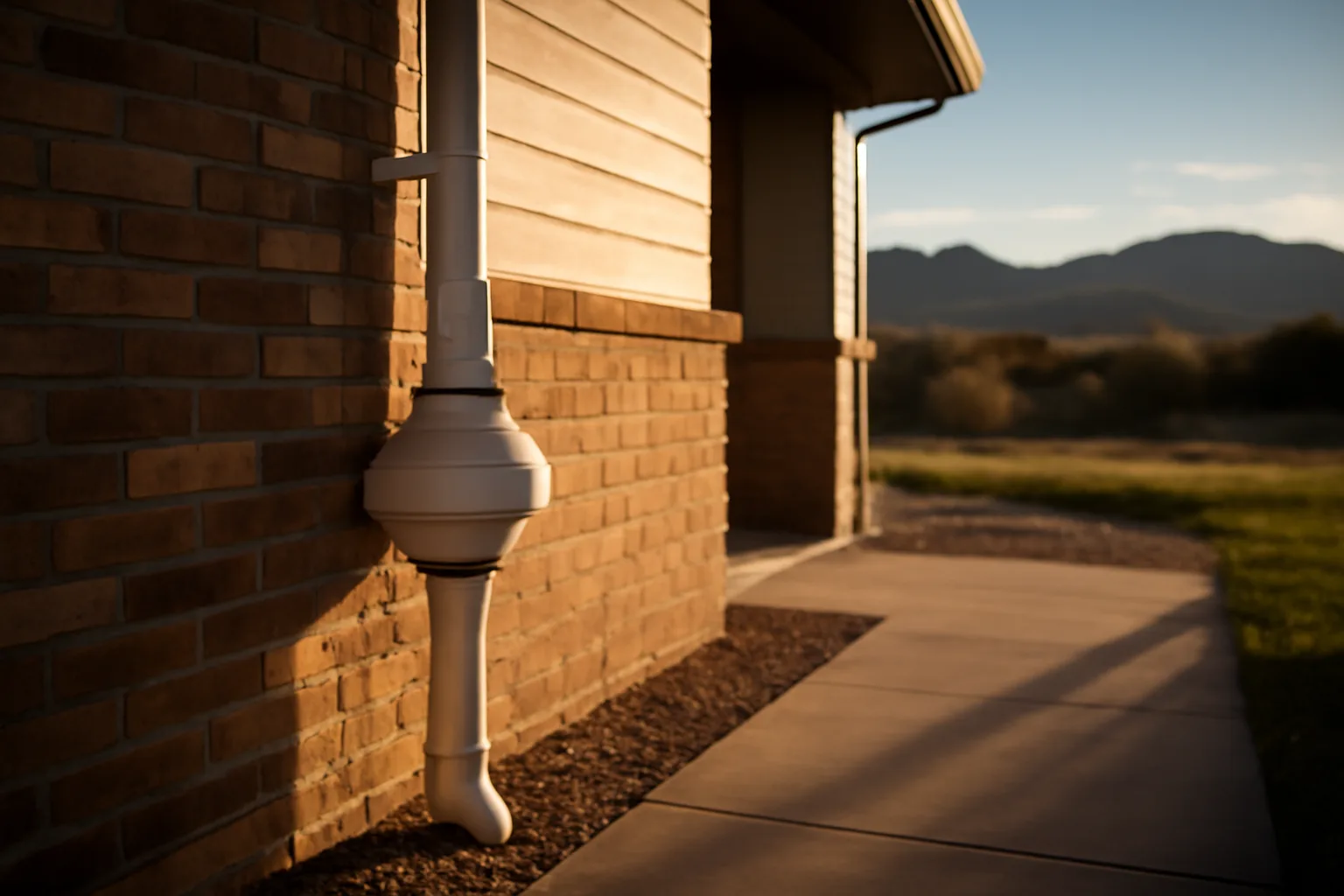
Most Colorado single-family homes get a sub-slab depressurization system. You core through the concrete slab, insert a suction pipe, connect it to a radon fan mounted in the attic or exterior, and vent above the roofline. You verify a negative pressure field under the slab with a manometer, seal penetrations, and leave a post-mitigation test device. The whole job runs four to six hours for a straightforward single-story home.
Does Colorado require post-mitigation testing after installing a system?
No state rule mandates post-mitigation testing, but AARST-ANSI standards recommend it and every credible mitigator does it. Always leave a post-mitigation test device and provide results to the client in writing. It's your only confirmation the system worked. Skipping it is the most common mistake new mitigators make, and it creates real liability if the client tests later and finds levels still above 4 pCi/L.
How much can I earn as a radon mitigator in Colorado?
There's no reliable industry salary survey specific to Colorado. The arithmetic: two jobs per week at $1,200 average gross revenue is roughly $125,000 per year before materials, equipment, insurance, and certification overhead. New mitigators often start at one job per week while building referral networks. Established contractors in high-demand Front Range markets report higher volume, but no published data confirms average annual earnings.
Sources
- Colorado DPHE, Indoor Radon Program: Colorado DPHE runs an indoor radon program, tracks radon data, and does not license radon mitigators; Colorado radon levels are among the highest in the nation
- Denver Business Licensing Center: Denver requires a business license for home services companies operating within city limits
- AARST, NRPP Certification and AARST-ANSI Standards: NRPP exam follows AARST-ANSI standards; AARST publishes technical standards covering sub-slab depressurization, crawlspace mitigation, and installation documentation
- Colorado Secretary of State, Business Filing Center: Colorado LLC filing is processed online through the Secretary of State; filing fee for a Colorado LLC is $50
- U.S. EPA, A Citizen's Guide to Radon: EPA recommends fixing homes with radon at or above 4 pCi/L; national mitigation cost range is $800 to $2,500
- USGS, Radioactive Elements in Coal and Fly Ash / Colorado Geology: Colorado's Front Range geology is uranium-rich granitic, contributing to high radon in soil and indoor air
- U.S. EPA, Map of Radon Zones: Most Colorado counties are classified as EPA Zone 1, with predicted average indoor radon screening levels greater than 4 pCi/L
- Colorado Department of Labor and Employment, Workers' Compensation Coverage Requirements: Colorado requires workers' compensation coverage for employers with employees, with very limited exceptions
- Connecticut Department of Public Health, Radon Program: Connecticut requires state licensure through its Department of Public Health for radon professionals
- Arkansas Department of Health, Radon Program: Arkansas runs a state certification program for radon contractors in addition to national certification