Last updated 2026-08-18
TL;DR
Arizona does not require a state-issued radon mitigation license. The state only certifies measurement professionals. To legally start a mitigation business, you need a contractor's license from the Arizona Registrar of Contractors, NRPP certification (optional but strongly recommended), and business registration. Typical system cost is $800 to $2,500, and installation takes 1 to 3 days.
What is radon, and is it a problem in Arizona?
Radon is a colorless, odorless radioactive gas that seeps up from soil. It's the second leading cause of lung cancer in the U.S. after smoking, responsible for about 21,000 deaths a year [1].
Arizona isn't a high-radon state like the Northeast. That doesn't mean you can ignore it. The EPA's radon zone map puts several Arizona counties in Zone 2 (moderate potential), including Apache, Navajo, and parts of Coconino [2]. Even in Zone 3 (low potential) counties, individual homes test high. A test is the only way to know.
For anyone starting a mitigation business here, the modest average risk means you're not fighting a hundred other companies for every job. Demand is real and growing as awareness spreads. Home inspectors and real estate agents are recommending radon tests more often, and when a test comes back above 4.0 pCi/L, the buyer wants a fix, fast.
Do you need a license for radon mitigation in Arizona?
No. Arizona does not issue a state license for radon mitigation professionals. The Arizona Radiation Regulatory Agency (ARRA) oversees radon professionals, but its authority under Arizona Revised Statutes Title 30, Chapter 7, Article 3 reaches only measurement professionals and laboratories. The statute reads: "A person shall not perform radon gas measurement services or represent or advertise that the person is a certified radon gas measurement professional unless the person is certified by the agency pursuant to this article" [3]. Mitigation is simply absent from the law.
So you can't get a state mitigation license, because one doesn't exist. The ARRA radon professionals page confirms the agency certifies measurement and lab professionals only [4].
"No state license" does not mean you can start punching holes in slabs paperwork-free. You still need a contractor's license from the Arizona Registrar of Contractors (ROC) if the work is valued at $1,000 or more, which nearly every mitigation job is [5]. The ROC wants a trade license (typically C-61 Limited Remodeling and Repair, or a general B-2 license if you do structural work). You also need a business license from the Arizona Department of Revenue for Transaction Privilege Tax, which is Arizona's version of sales tax [6].
The real licensing stack: (1) ROC contractor's license, (2) ADOR TPT license, (3) optional but recommended NRPP certification. No radon-specific license from the state.
What certifications or training do you need to start?
Arizona doesn't require a radon mitigation certification, but you'll struggle to book jobs without one. Real estate agents, home inspectors, and informed homeowners look for proof you know the work. The industry standard is National Radon Proficiency Program (NRPP) certification for mitigation, managed by the National Radon Safety Board (NRSB) [7].
NRPP certification covers system design, installation, diagnostics, and health and safety. You pass an exam, complete a set number of training hours, and log field experience. The EPA endorses NRPP as meeting the proficiency standard for radon mitigation [7].
AARST (American Association of Radon Scientists and Technologists) membership is an alternative credential with its own standards and training. Some states near Arizona, like Colorado, run their own certification programs, but Arizona doesn't reciprocate automatically.
RadonPath offers a $149 one-time NRPP Mitigation Kit that bundles the training materials, exam prep, and field checklists you need to get certified [8]. It's a cheap way to build the paper trail without paying thousands for separate courses.
My advice: get NRPP-certified before you quote your first job. It saves you from learning on your neighbor's dime.
How much does radon mitigation cost in Arizona?
Radon mitigation costs in Arizona track the national average closely. The EPA's Consumer's Guide to Radon Reduction gives a typical range of $800 to $2,500, with an average around $1,200 [9]. That's for a standard active sub-slab depressurization system on a slab-on-grade home, which is common here.
Crawlspace homes cost more, usually $1,200 to $2,500, because they need a vapor barrier and extra sealing. Drainage systems or complex layouts push the price higher. The chart below breaks the average down by foundation type.
Where does the money go? Materials (PVC pipe, fan, manometer, sealant, wiring) run $200 to $400. Labor (2 to 4 person-days) is the biggest variable. Permits and ROC compliance add a few hundred dollars. If you're pricing a job, Arizona's thin competition can let you charge on the higher end when you're certified and responsive.
Most homeowners pay out of pocket. Arizona has no state radon tax credit or grant program, though a utility rebate pops up now and then. In real estate deals, the cost is often folded into closing negotiations.
How long does radon mitigation take in Arizona?
A standard radon mitigation installation takes one to three days, with most jobs finishing in about a day and a half [9]. Day one is the heavy work: drilling the slab, digging a suction pit, running the pipe, connecting the fan. Day two is usually sealing, electrical, and testing.
Post-mitigation testing is not optional. The EPA recommends a short-term test (48 hours) no sooner than 24 hours after the fan starts running [9]. That confirms the system works before you call the job done. Some contractors leave a continuous radon monitor for the client. Others rely on the homeowner's test kit. Either way, go back to check the system and read the manometer after a week or two.
The timeline stretches if you have to ship a specialty fan, or if the ROC permit inspection drags. In rural Arizona, a material run can add a day. For most homes in Phoenix, Tucson, or Flagstaff, you're in and out in two days.
Step-by-step: Starting a radon mitigation business in Arizona
Here's the honest paper path, in order.
1. Get your NRPP Mitigation Certification. The RadonPath kit is a cheap start, but AARST or a university course works too. Plan on 2 to 4 weeks of study and fieldwork.
2. Register your business with the Arizona Corporation Commission or the county recorder. If you're a sole proprietor, a trade name is fine.
3. Apply for a Transaction Privilege Tax license from the Arizona Department of Revenue [6]. This lets you collect and remit sales tax on materials you install.
4. Apply for a contractor's license from the Arizona Registrar of Contractors [5]. You pass a trade exam and a business management exam. C-61 is the most common classification for mitigation work. Budget $500 to $800 for application and exam fees, and a few months for processing.
5. Get general liability insurance and workers' compensation (if you have employees). Many clients ask for proof.
6. Buy your equipment: a core drill, hammer drill, PVC cutter, manometer, and a reliable fan. Don't skimp on the fan. It's the heart of the system.
7. Set up a testing protocol. You measure radon before and after installation. Subcontract testing to a certified measurement professional while you earn your own measurement certification later.
8. Start marketing. Real estate agents are your best channel. Join local home inspector associations and hand out free radon test kits.
Common radon mitigation methods used in Arizona
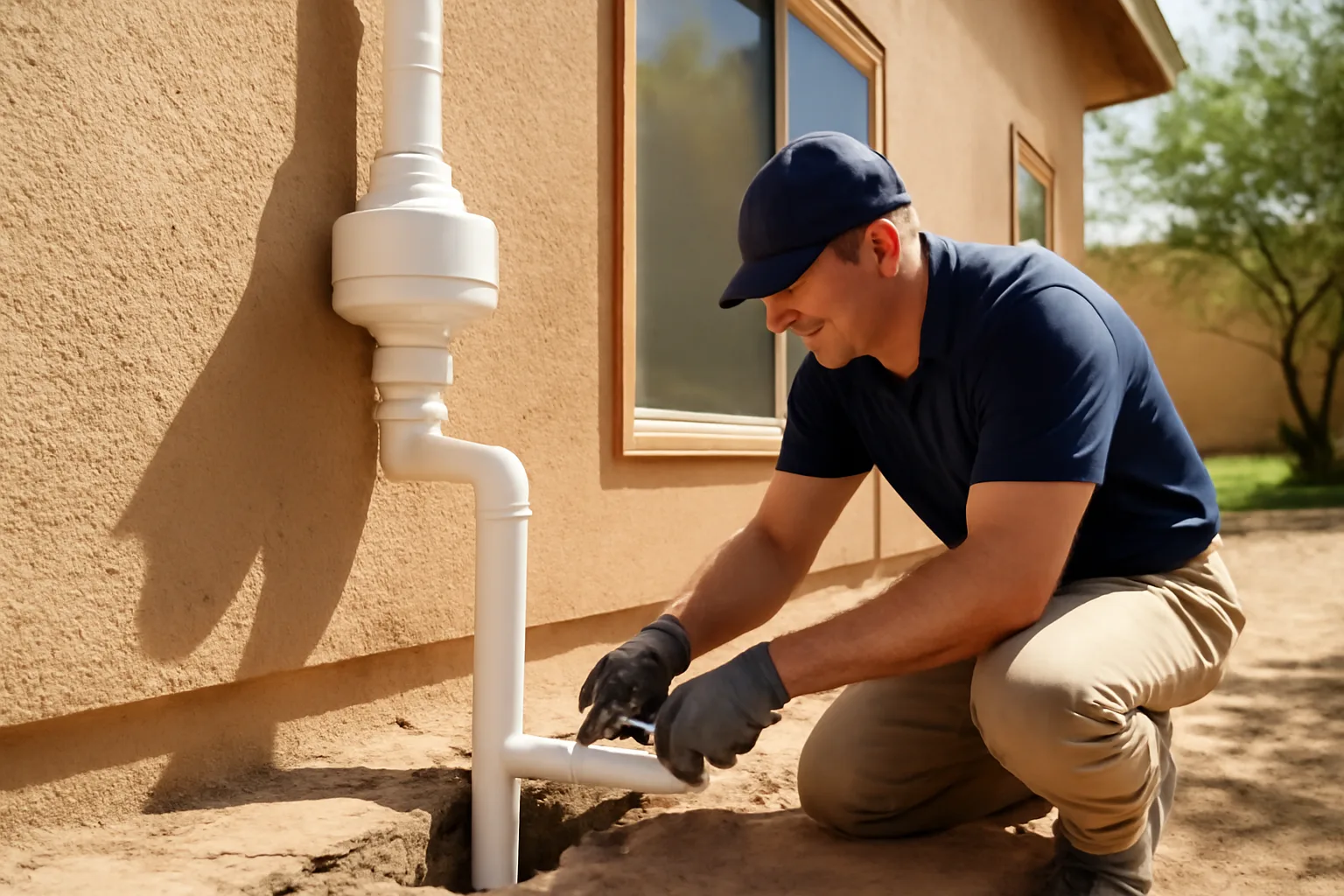
Arizona homes are mostly slab-on-grade, which is the easiest foundation for radon mitigation. The standard method is active sub-slab depressurization (ASD). You core a 4- to 5-inch hole through the slab, dig out a small suction pit, run a PVC pipe up through the roof or out an exterior wall, and install a continuously running fan [9].
Crawlspace homes need sub-membrane depressurization. Lay a heavy polyethylene sheet over the soil, seal the edges, and run a pipe from under the sheet to a fan. This takes more labor and costs more than slab work.
Some Arizona homes mix slab and crawlspace, or have a basement (rare, but they turn up in older Flagstaff homes). You test pressure field extension and may run multiple suction points. Never assume a single point covers a complex footprint.
A few companies push passive systems or radon sumps. These are second-rate. Active systems with a fan are the only reliable method. EPA's guide confirms that active systems are recommended for homes with radon levels above 4 pCi/L [9].
How to get your first radon mitigation jobs in Arizona
You won't get rich on radon mitigation alone in Arizona. The market is small. The work is steady and profitable if you're one of the few certified contractors in your area. Start by building relationships with real estate agents who order home inspections. Offer a short presentation at their office on radon risk and the fix. Leave a stack of business cards and a few test kits.
Home inspectors are your other foot in the door. Many don't offer radon testing because they aren't certified. Partner with a measurement professional to sell a combined service. When a test comes back high, you get the call.
Don't ignore online search. A well-optimized Google Business Profile with "radon mitigation Arizona" and your city name brings in a few leads a month. Cost per click is low because competition is thin.
Get listed on the NRPP and AARST directories too. Those are the first places homeowners and agents look when they need a certified mitigator.
What about radon measurement in Arizona?
This guide is about mitigation, but you should understand the measurement side. In Arizona, ARRA requires anyone offering radon measurement services for compensation to be certified as a measurement professional [3]. The process involves training, an exam, and an application to ARRA. The agency maintains the list of certified measurement professionals [4].
If you plan to offer both testing and mitigation, you hold separate certifications. You cannot test a home you're mitigating on the same transaction, since that's a conflict of interest. You can be a one-stop shop for separate clients. Many small radon companies in Arizona are one person holding both certifications.
Frequently asked questions about radon mitigation in Arizona
Answers to the questions I hear most from people starting out are below.
Frequently asked questions
Do you need a license for radon mitigation in Arizona?
No. Arizona does not issue a state license for radon mitigation. The state only certifies radon measurement professionals and laboratories. To operate a mitigation business legally, you need a contractor's license from the Arizona Registrar of Contractors and a Transaction Privilege Tax license from the Department of Revenue. NRPP certification is optional but strongly recommended for credibility.
How much does radon mitigation cost in Arizona?
The typical cost is $800 to $2,500, with an average of $1,200 for a standard slab-on-grade home. Crawlspace systems run $1,200 to $2,500. Costs vary by foundation type, home size, and local labor rates. Arizona has no state tax credit for radon mitigation, so it's usually an out-of-pocket expense.
How long does radon mitigation take in Arizona?
Installation takes 1 to 3 days for most homes. A standard slab-on-grade job is usually finished in about a day and a half. Post-installation testing takes another 48 hours. The timeline runs longer if permits or specialty materials are delayed.
Is radon a real problem in Arizona?
Yes, radon is a concern in some areas. The EPA map shows moderate risk (Zone 2) in counties like Apache, Navajo, and parts of Coconino. Even in low-risk zones, individual homes test high. The EPA recommends testing all homes below the third floor.
What is the best radon mitigation certification?
NRPP (National Radon Proficiency Program) certification is the most widely recognized. The EPA endorses it as meeting the proficiency standard for mitigation. AARST certification is also respected. Both require training, an exam, and field experience.
Can I do radon mitigation myself as a homeowner?
Yes, homeowners can install their own radon system in Arizona without a license. DIY mitigation isn't recommended unless you have construction experience and follow EPA protocols. A poorly installed system can be ineffective or unsafe. Most homeowners hire a certified professional.
What contractor classification do I need for radon mitigation in Arizona?
Most radon mitigators get a C-61 Limited Remodeling and Repair license from the Arizona Registrar of Contractors. If you do broader structural work, a B-2 General Small Commercial license may be required. Check with the ROC for the exact classification based on your scope of work.
How do I find radon mitigation training in Arizona?
There are no in-person training centers in Arizona specific to radon mitigation. Most people complete an online course through NRPP or AARST, then shadow a certified mitigator for field experience. RadonPath's kit includes all the study materials needed for the NRPP exam.
Do I need insurance for a radon mitigation business?
Yes. General liability insurance is a must. Many clients and real estate agents will ask for proof. Workers' compensation is required if you have employees. Errors and omissions insurance is worth considering, though it isn't required.
Are there any radon grants or tax credits in Arizona?
No, Arizona does not offer a state-level radon mitigation grant or tax credit. Some federal programs may help with home improvement loans, but direct subsidies are rare. The homeowner usually bears the cost.
Sources
- EPA, Radon in Homes: Radon is the second leading cause of lung cancer, causing about 21,000 deaths per year.
- EPA, Map of Radon Zones: Arizona counties like Apache and Navajo are in Zone 2 (moderate potential).
- Arizona Revised Statutes, Title 30, Chapter 7, Article 3, Section 30-702: A person shall not perform radon gas measurement services... unless the person is certified by the agency.
- Arizona Department of Health Services, Radon Professionals: The agency certifies measurement and lab professionals; mitigation is not listed.
- Arizona Registrar of Contractors: Any contractor performing work valued at $1,000 or more must be licensed.
- Arizona Department of Revenue, Starting a Business: All businesses in Arizona must obtain a transaction privilege tax license.
- National Radon Safety Board, NRPP Certification: NRPP certification is recognized by EPA as meeting the standard for radon mitigation proficiency.
- RadonPath, NRPP Mitigation Kit: RadonPath offers a $149 one-time NRPP Mitigation Kit with training materials.
- EPA, Consumer's Guide to Radon Reduction: Typical radon mitigation costs $800-$2,500, average $1,200; installation takes 1-3 days.